Our last full day in Kruger and it didn’t disappoint. Always a wonderful variety of birds.

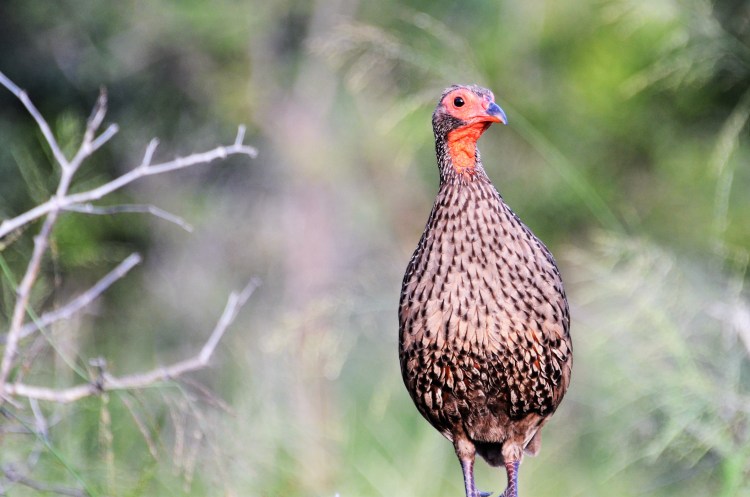

This gives you an idea how challenging it can be following the rain. We didn’t try.


Two days ago our guide Greg removed a rhino that had died of natural causes, from a watering hole . He had to wade into the water up to his neck to get a rope around its body so they could drag it out with their Land Cruiser. They wanted to remove the horn so that poachers wouldn’t get their hands on it.
Rhino poaching has escalated in recent years and is being driven by the demand for rhino horn in asian countries, particularly Vietnam. It is used in Traditional Chinese Medicine but more and more commonly now it is used as a status symbol to display someone’s success and wealth. As South Africa is home to the majority of rhinos in the world it is being heavily targeted by poachers. However poaching is now a threat in all rhino range states and field programmes are having to investment heavily in anti-poaching activities.
The scarcity of rhinos today and the corresponding intermittent availability of rhino horn only drives the price higher, and intensifies the pressure on the declining rhino populations. For people whose annual income is often far below the subsistence level, the opportunity to change one’s life by killing an animal that they don’t value is overwhelming.
Poachers are now being supplied by international criminal gangs with sophisticated equipment to track and kill rhinos. Often they use a tranquiliser gun to bring the rhino down and hack of its horn leaving the rhino to wake up and bleed to death very painfully and slowly. Poachers are also often armed with guns making them very dangerous for the anti-poaching teams who put their lives on the line to protect rhinos.
What is rhino horn?
Rhino horns are similar in structure to horses’ hooves, turtle beaks, and cockatoo bills. They are made of keratin – in rhinoceros horn it is chemically complex and contains large quantities of sulphur-containing amino acids, particularly cysteine, but also tyrosine, histidine, lysine, and arginine, and the salts calcium carbonate and calcium phosphate.
Traditional Chinese Medicine
According to traditional Chinese texts, such as Li Shih-chen’s 1597 medical text “Pen Ts’ ao Kang Mu”, rhino horn has been used in Chinese medicine for more than 2000 and is used to treat fever, rheumatism, gout, and other disorders. It also states that the horn could also cure snakebites, hallucinations, typhoid, headaches, carbuncles, vomiting, food poisoning, and “devil possession.” (However, it is not, as commonly believed, prescribed as an aphrodisiac).
Rhino horn, is shaved or ground into a powder and dissolved in boiling water and consumed by the patient.
As Richard Ellis, author of “Tiger bone and rhino horn” wrote in 2005 for the EAZA Rhino Campaign’s Info Pack: “It is not clear that rhino horn serves any medicinal purpose whatsoever, but it is a testimony to the power of tradition that millions of people believe that it does. Of course, if people want to believe in prayer, acupuncture or voodoo as a cure for what ails them, there is no reason why they shouldn’t, but if animals are being killed to provide nostrums that have been shown to be useless, then there is a very good reason to curtail the use of rhino horn. There are five species of rhinoceros and, with the exception of one subspecies of African white rhino, all are in danger of being hunted to extinction for their horns. Rhinos as we know them have been around for millions of years, but Dr H. Spaiens has created a predicament from which they might never recover. It is heartbreaking to realise that the world’s rhinos are being eliminated from the face of the earth in the name of medications that probably don’t work.”
Aphrodisiac
There is a belief in the West that rhino horn is used as an aphrodisiac and sexual stimulant but this is not correct and seems to have been misunderstood or misinterpreted by Western media. However, research has shown that people in Vietnam are starting to believe this rumour as they are consuming it for new reasons.
Even without aphrodisiacal properties, however, rhino horn is one of the mainstays of TCM, and its collection has been responsible for the death of tens of thousands of rhinos around the world.
Make no mistake: those people who use rhino horn to cure medical ailments really believe it works. That’s what drives up the demand on which the poachers thrive. As Ann and Steve Toon commented in 2002, “For practitioners of traditional Asian medicine, rhino horn is not perceived as a frivolous love potion, but as an irreplaceable pharmaceutical necessity.”
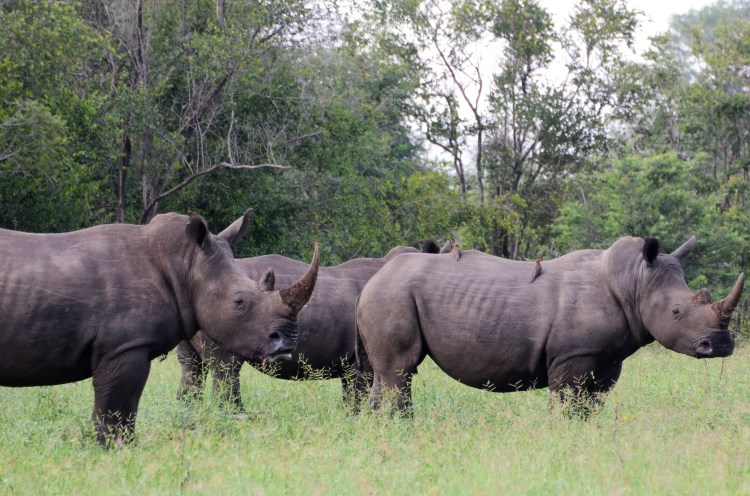
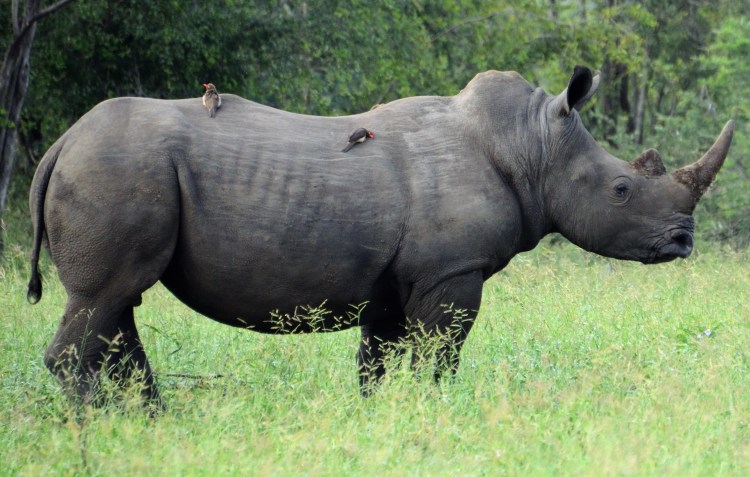
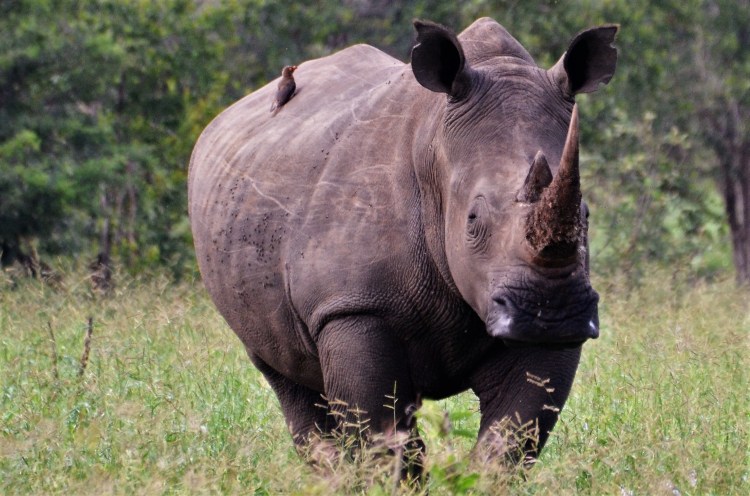
These Rhinos were 100m from where the dead rhino was found so it may have been a territorial battle that caused its death.
The following images may be a little unsettling but they don’t come close to the experience when you add in the stench of death.
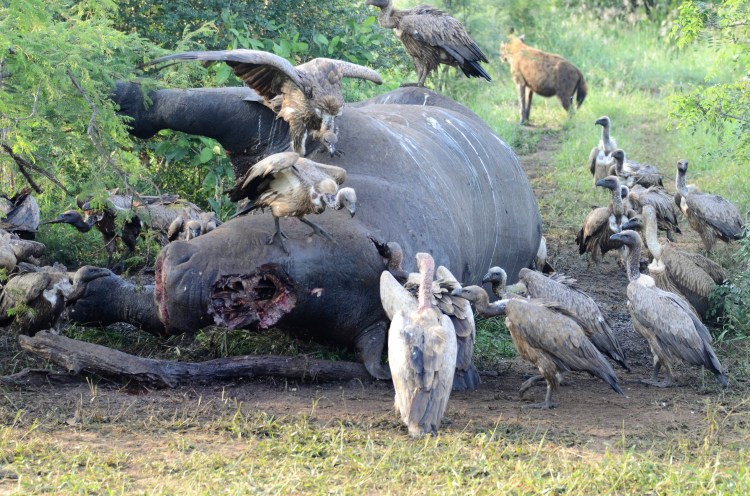

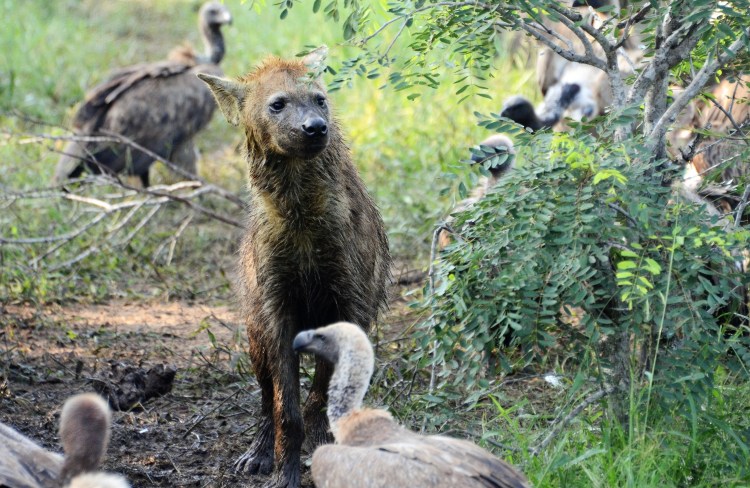
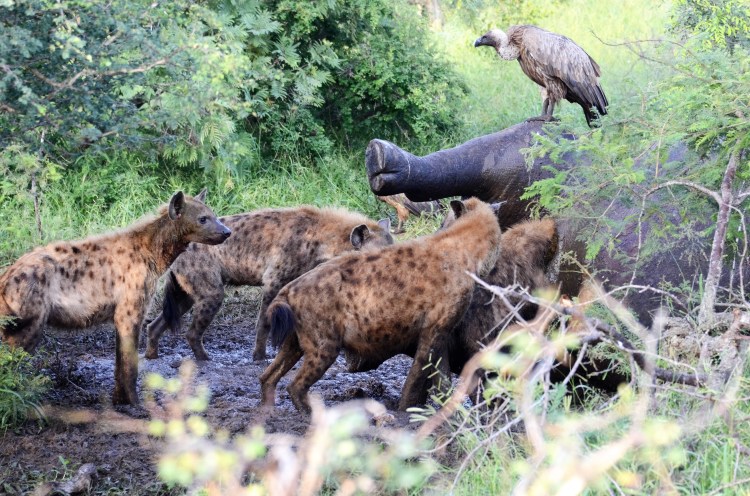
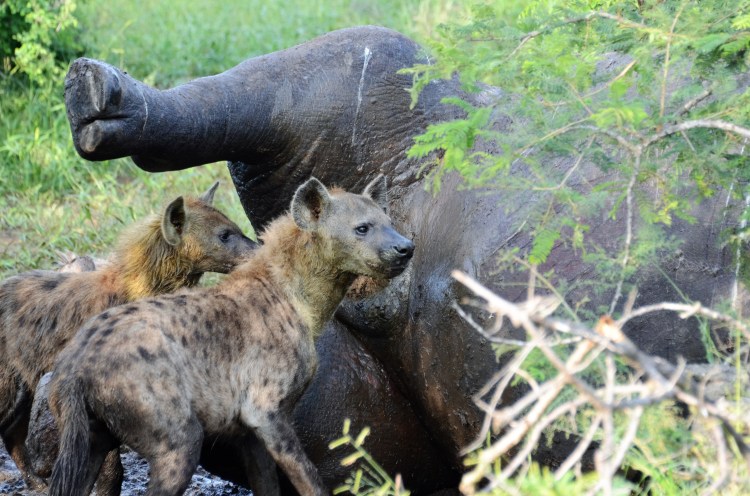


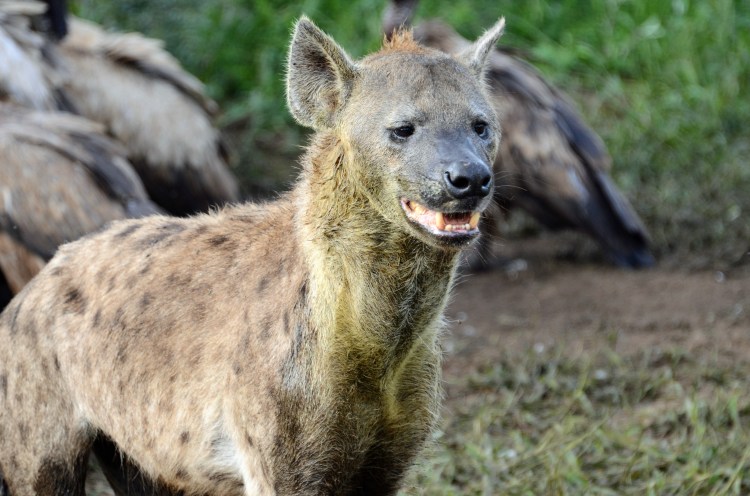



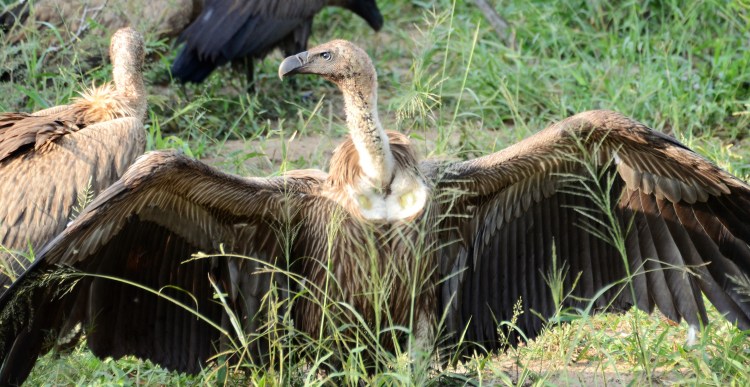
Quite the morning!
Back at camp David wonders if he can eat breakfast.


Following breakfast back to our tent to shower and relax.

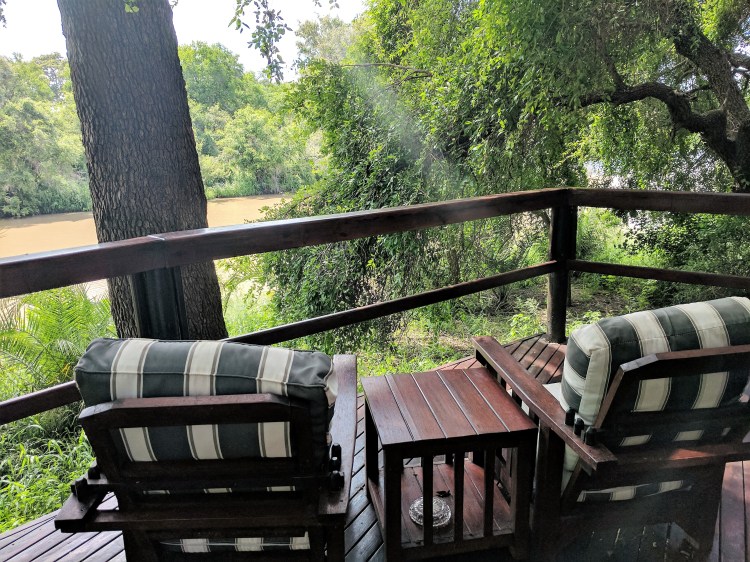
Our final afternoon drive at Hamiltons.
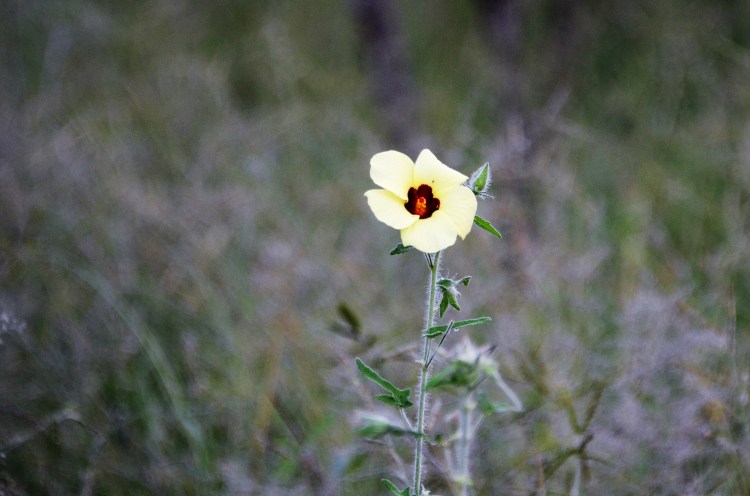
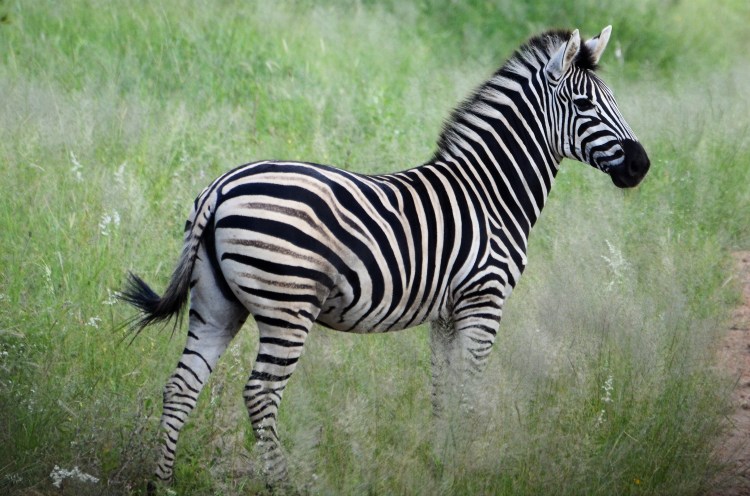

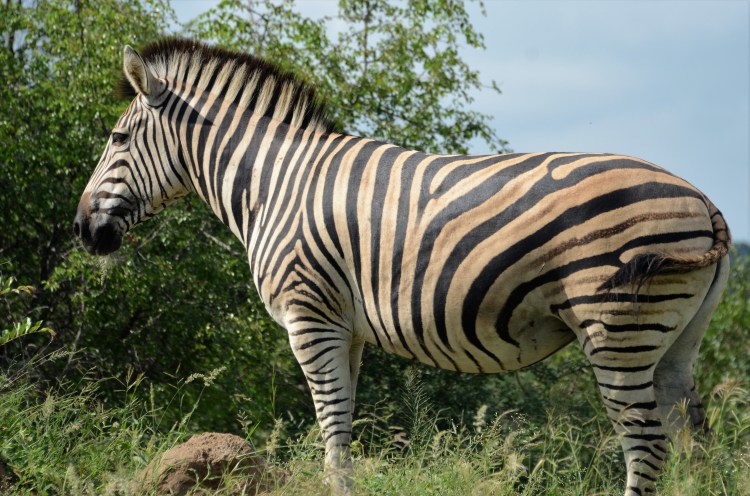

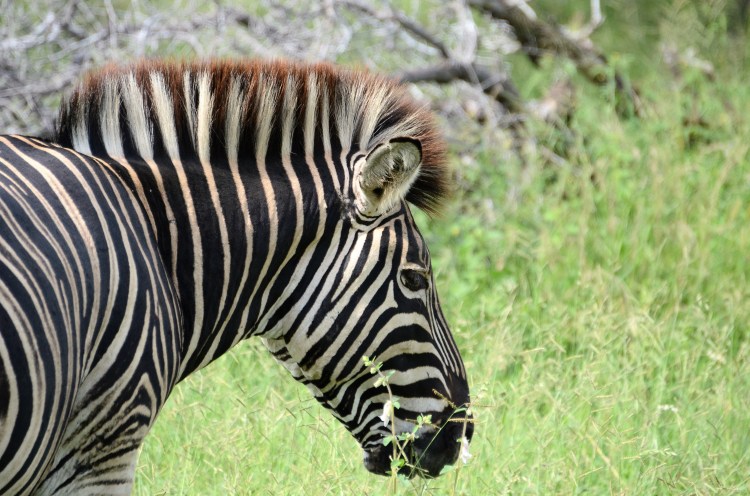
Beautiful evening for sundowners.

They grow everything bigger in Africa.
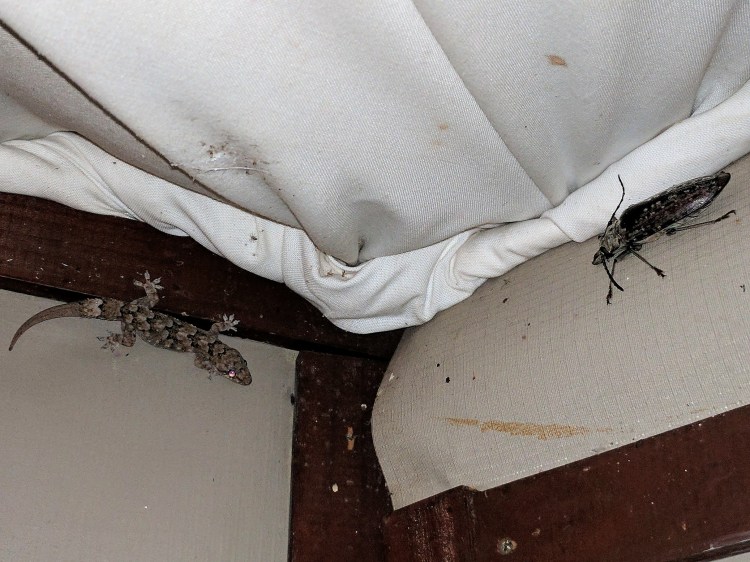
Good night.

 sa2017site.com
Fantastic photos, Doug. Thanks for sharing your experience!!
LikeLike