Day 14 – Swakopmund

For our first full day in Swakopmund we set out to explore the area. We drove south to Walvis Bay (Whale Bay) across the edge of the Namib Desert where it meets the Atlantic Ocean. Apparently Namibia is the only place in the world where a desert meets the ocean.

We parked our trucks in the harbor and went for a walk along the waterfront and along the lagoon. The lagoon is the largest single area of shallow water on the west coast of Africa and is safe haven for between 70,000 and 120,000 birds, and a feeding station for up to 200,000 birds on their natural migration route to and from the Arctic Circle. The lagoon is regarded as one of the most important areas for coastal birds and the best flamingo viewing locality in the world.

Following lunch we drove out through the Namib Dune belt past some of the highest dunes in the world to Dune 7 where we stopped for a photos, but it was mid day and hot so didn’t bother trying to climb it. We also knew we would have the opportunity to climb a dune later.

We finished the day on David and Tracy’s balcony for sundowners.

Day 13 – Namib Desert

A 6:30 start to do another nature walk.

Following breakfast we continue our journey out to the west coast on dusty gravel roads through the Namib Desert.

swakop

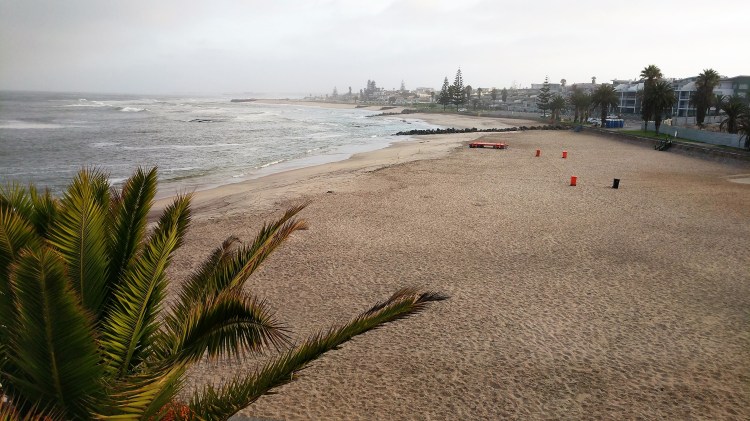
Sandwiched between Atlantic rollers and the Namib Desert, Swakopmund is one of those great traveller waystations along the African road. Swakopmund is a beach resort and an example of German colonial architecture. It was founded in 1892 as the main harbour for, German South West Africa and a small part of its population is still German-speaking today. Swakopmund is German for “Mouth of the Swakop”.

A little bit of history is worth noting:

In 1903, some of the Khoi and Herero tribes rose in revolt and about 60 German settlers were killed. Troops were sent from Germany to re-establish order but only dispersed the rebels, led by Chief Samuel Maharero.

In October 1904, General Lothar von Trotha issued orders to kill every male Herero and drive the women and children into the desert. As soon as the news of this order reached Germany, it was repealed, but the rest of the native population had already become in full-scale revolt. When the order was lifted at the end of 1904, prisoners were herded into concentration  camps and given as slave labour to German businesses; many died of overwork and malnutrition.

It took until 1908 to re-establish German authority over the territory. By that time tens of thousands of Africans (estimates range from 34,000 to 110,000had been either killed or died of thirst while fleeing. At the height of the campaign some 19,000 German troops were involved. (the story sounds somewhat familiar)

img-20170227-wa0000

View from our room in Swakopmund


Day 12 -Erongo Mountains

Erongo Mountain Lodge is located in a special wilderness area, encircled by the Erongo Mountains, where the desert, mountain, and bushveld ecosystems combine.

This morning we went on a 3 1/2 hr  hike that led us up into the rocky outcrops and over the granite whalebacks, offering stunning views of the surrounding landscape and the lodge below. Our guide had grown up in the area, and was very interesting, with some fascinating stories to tell.

Then we had breakfast and relaxed for the rest of the day.

That afternoon we went on a nature drive in an open 4WD vehicle.

We made a stop to visit Paula’s Cave that was accessed up a relatively steep trail skirting along the rocky hillside, it features some interesting Bushman rock art depicting various animals and people that are estimated to be 2500 years old.

Following the visit to Paula’s Cave we drove to a lovely spot to have sundowners and were treated to a spectacular sunset with rainbows.


Day 11 – Namibia

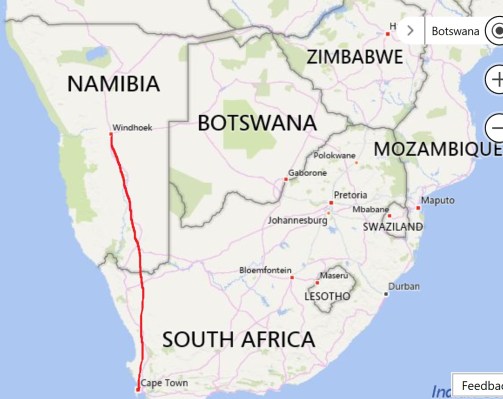
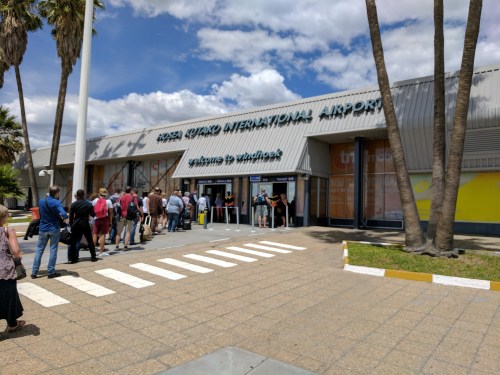
Next up Namibia. We dropped off our rental van at Cape Town Airport for our flight to

Windhoek, Namibia.

namibia

img_20170224_135554

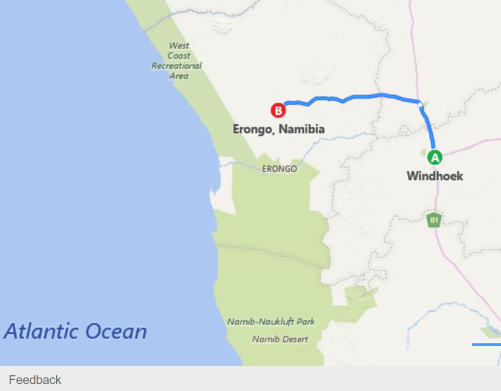
From Windhoek we rented two four wheel drive trucks and headed off to Erongo Nature Reserve about a 3 1/2 hr drive.

reongo

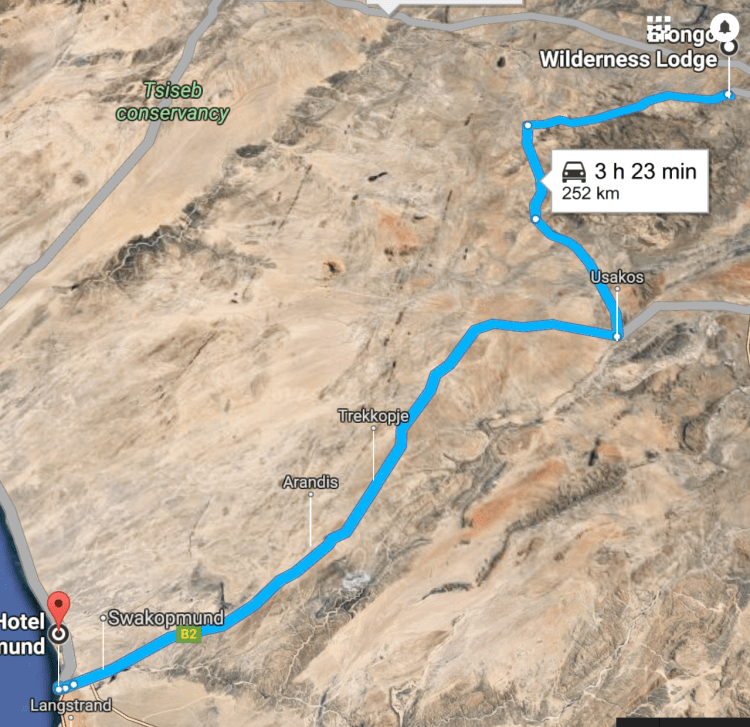
Just west of Omaruru, Erongo Wilderness Lodge perches amidst the rugged granite kopjes of Namibia’s Erongo Mountains, in the vicinity of an ancient volcanic crater and within a conservation area. With views across the mountains, the lodge is known for its walking and birding opportunities.

We arrived too late to go on any walks so we just unpacked, cleaned up and met at the main camp area where we sat outside at a candle lit table under an unimaginable number of stars to enjoy conversation and a meal.


Day 10 – Stellenbosch

Today a little shopping and wandering around Stellenbosch in the morning and then heading off to Babylonstoren.

Dating back to 1692, Babylonstoren is a historic Cape Dutch farm that boasts one of the best preserved farmyards in the Cape. Beloved for its magnificent garden that is laid out over 3,5 hectares (8 acres), the garden is divided into 15 sections that comprise fruit, vegetables, berries, bees for pollinating, indigenous plants, fragrant lawns, a prickly pear maze, ducks and chickens, and more. A secluded path runs along the stream where thousands of clivias flower in spring. The garden also boasts a plethora of trees of historical and botanical import. Every aspect of Babylonstoren – including the contemporary Farm Hotel & Spa, the Farm Shop and Bakery – are led by the ever-changing tapestry and botanical diversity of the garden.

Once again Mel had to book lunch here months in advance, and again it was worth the effort and the planning.

After lunch we wandered through the farm.

That night we went to Wijnhuis Restaurant for dinner, walking distance from our hotel.

img_20170223_184846

Day 9 -Wine Region

Our stay could have been longer in De Hoop but we are heading back toward Cape Town to the wine region. (never too far from the wine) Our trip takes us through endless farms on rolling hills.

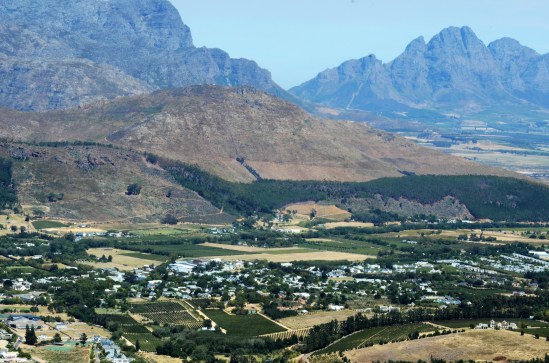
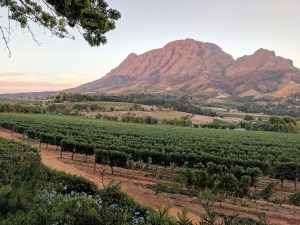
We approach Franschhoek through a mountain pass high above the town.

dsc_4472

Our first stop was at  Bellingham Wines for a tasting. (This is a winery that Peller Estates represents in Canada) We also stopped at La Motte to explore their beautiful property and the La Motte Museum which offers a  cultural-historical experience,  featured is the history of La Motte and its magnificently renovated buildings, with a brief review of Cape Dutch architecture, supported by photographs from that era.

The museum is currently hosting a tribute exhibition to the life and art of South Africa’s greatest master, Jacob Hendrik Pierneef.

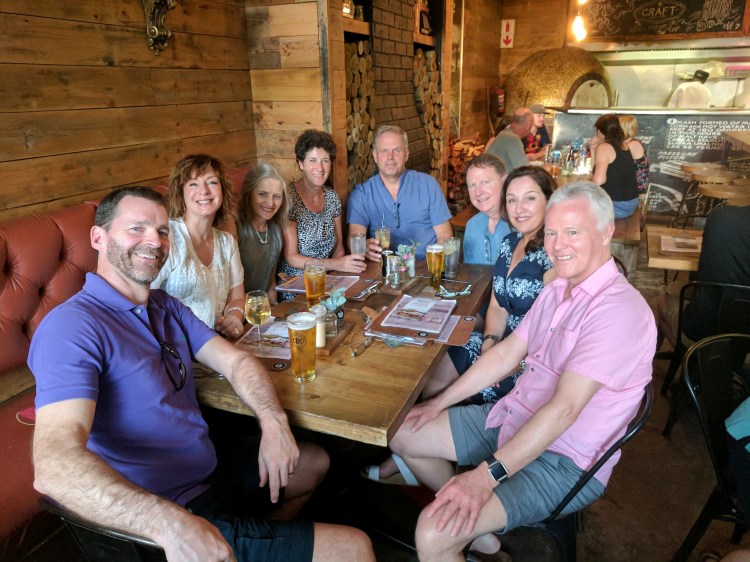
 Once again we had an amazing culinary experience in a beautiful setting with great service. (at a reasonable price)

Day 8 – On the Road Again

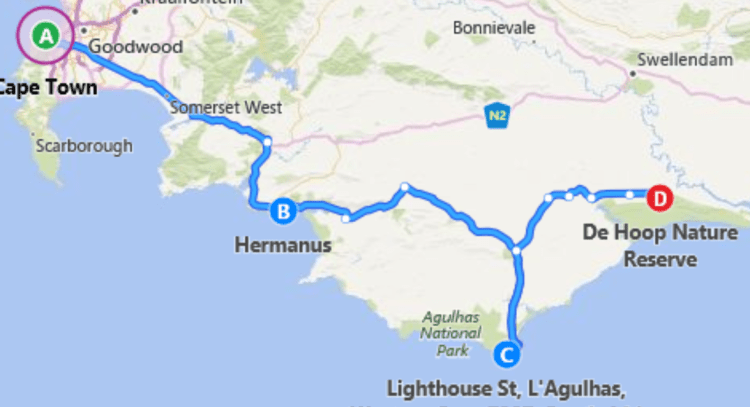
This was our last day in Cape Town and following  breakfast we were picked up and driven to the Budget Car Rental to pick up a van to continue our journey. Once again we had to face the challenge of Cape Town traffic to head south-east out of town. Traffic was slow and steady but moved very well once we cleared the city. Our first stop was Peregrin Farm Stall to pick up some fresh baked goods and fruit….lovely spot. Then to Hermanus to enjoy a walk along the beach and a quick exposure to a very popular holiday location for South Africans.

Next stop Cape Agulhas the southern most tip of Africa and where the Indian and Atlantic oceans meet.

capture

Our final destination was the De Hoop Nature Reserve.

De Hoop is one of the largest natural areas managed by CapeNature. This beautiful reserve is a favourite for hikers, cyclists, and bird and whale watchers. The reserve, which is 34 000 hectares, is just three hours from Cape Town, in the Overberg.

The neighbouring marine reserve, which extends 5km out to sea, is one of the largest marine protected areas in Africa. It conserves a vast and fascinating variety of marine life. The reserve is a World Heritage Site.

We got up at 5:30am our first morning at De Hoop to go on a 2 hour bird watching walk around the property. The pictures capture a small number of the sightings.

The Cape Mountain Zebra and the Bontebok were both near extinction and are recovering here.

Following breakfast we head out to the sand dunes, about a 15 km drive. We walked over the dunes and along the beach and trails for a couple of hours.

Back to camp for a picnic lunch. (starting to worry about the constant presence of wine)

img_20170221_140317

Our last night.

Day 7 -Culinary Experience Extraordinary

We didn’t have a specific plan for today until Mel had two university friends drop by to stay hi. They said we must go to Constantia Glen , a new winery about 5 km away from Glen Avon to enjoy a spectacular setting for a winery. So we set off  on foot to make sure we got our exercise for the day and plodded up the hill on pedestrian unfriendly roadways. We arrived at the gates to be met by security guards and advised that we couldn’t walk the 600m up to the winery. Apparently the Getty’s didn’t appreciate people just walking onto the property so we arranged for an employee to come down and pick us up.

We sat outside on a lovely patio with incredible views of the mountains, the vineyard and the valley and enjoyed a light lunch and a few Constantia Glen wines. It definitely lived up to the recommendation.

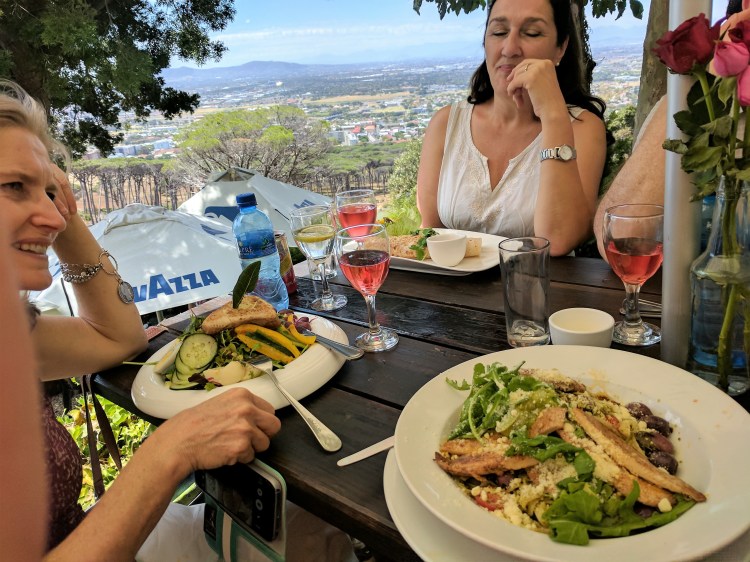
Then we walked back home and rested up for our next culinary experience at one of South Africa’s top restaurants, La Colombe.

As you ascend the winding road on Silvermist estate, time seems to slow down.
At each bend, as the city tilts away beneath you, you rise to new heights of quiet anticipation. There’s a reason you feel this way – you’re on top of a mountain and about to dine at the new incarnation of La Colombe, frequent contender on our Top 10 list and no stranger to S.Pellegrino’s World’s 50 Best Restaurants.”— Linda Scarborough, Eat Out

Truly amazing and at prices one can afford.


Day 6 – The Gardens and the Memorial

Today we are back to the beautiful Kirstenbosch National Botanical Garden but this time to stay and enjoy. The gardens cover an area of 528 hectares with 36 hectares of cultivated garden. The gardens are a celebration of South African flora – showcasing only indigenous South African plants. Fynbos, proteas, cycads and rolling lawns are intermingled with streams and ponds and well-laid out pathways for easy walking. A great variety of birds inhabit the gardens and the sweeping views from the upper slopes are spectacular.
From Kirstenbosch we head over to the Rhodes Memorial.
Rhodes Memorial is a structure that was built in 1912 on the slopes of Devil’s Peak a short hike below the block house, and above the University of Cape Town. The edifice was built by Sir Herbert Baker in remembrance of Cecil John Rhodes who lived between the years 1853 to the year 1902. With its spectacular views, it’s a popular spot for tourists to visit, those who’ve just got married to get photos taken, hikers to start their trip up and families to come for lunches.
The structure has 49 steps, one for each year that Rhodes lived, leading up to a statue of the man leaning his head on his right hand. Below the statue is inscribed: “THE IMMENSE AND BROODING SPIRIT STILL SHALL QUICKEN AND CONTROL. LIVING HE WAS THE LAND AND DEAD HIS SOUL SHALL BE HER SOUL”, which I understand is an extract from a Rudyard Kipling poem, Burial. Above the statue it says: “TO THE SPIRIT AND LIFE WORK OF CECIL JOHN RHODES WHO LOVED AND SERVED SOUTH AFRICA. 1853 – 1902”.
On each side of the steps are 4 lion statues (which visitors to the memorial like to sit on & have their photo taken, although this is not recommended as there is quite a drop to the side of the lions).

At the bottom of the steps is a bronzed horseman with the horse having one leg raised in the air and the horseman shading his eyes from the sun as he looks out over Cape Town’s northern suburbs. The following words are chiselled into the blocks of Cape granite below the horseman: “ENERGY, THE WORK OF GF WATTSRA, AND BY HIM GIVEN TO THE GENIUS OF CECIL RHODES”.

The terrace of the steps is semi circular in nature and at the top of the steps is a monument of pillars that is rectangular – shaped. Granite is used to line the stairs and on the granite is the structure of eight lions.

We had lunch at Rhodes Memorial Restaurant and Tea Garden with panoramic views over the Cape Flats.

img_20170218_131508

Day 5 – The Penguins

Today we head off for a kayaking adventure to visit a penguin colony in suburban Cape Town. The trip leaves from Simon’s Town Waterfront and we paddle past the Naval Harbour and out to Boulder’s Beach to see the penguins.


After drying off we drove out to the Cape Point Nature Reserve. It was once believed that the Cape of Good Hope was the dividing point between the Atlantic and Indian Oceans, and that the Cape of Good Hope is the southern tip of Africa. In fact, the southernmost point is Cape Agulhas, about 150 kilometres (90 mi) to the east-southeast.[2] The currents of the two oceans meet at the point where the warm-water Agulhas current meets the cold water Benguela current and turns back on itself—a point that fluctuates between Cape Agulhas and Cape Point (about 1.2 kilometers east of the Cape of Good Hope).

For lunch we drove back along False Bay to the Harbour House Restaurant in Kalk Bay for another marvelous meal.


That evening we walked down to Peddlars to have cocktails with university friends of Mels before having dinner at Kitima Restaurant. Kitima at the Kronendal is situated in an old Cape-Dutch style homestead dating back to the 17th Century which is steeped in history and legend. Several hundred years ago, the Dutch East India Company traded between Europe, the Cape of Good Hope and Ayutthaya, the ancient capital of Siam.

The Kronendal was the first farm in Hout Bay established in the 1670’s. The homestead is one of the oldest and only surviving example of the Cape Dutch typical H-plan architecture in the Cape Peninsula. The back section of the homestead was built in the early 1700s (which explains why the back gable carries the year 1713). The building was enlarged several decades later by Johannes Guilliam Van Helsdingen where 1800 appears on the front gable. The homestead changes ownerships many times throughout the centuries and was declared a National Monument in 1961.

Between 1835 and 1849 the Kronendal Farm was owned by Sir Abraham Josias Cloete. Legend tells that the homestead is still haunted by his daughter Elsa Cloete who died of a broken heart after she was forbidden to marry her soldier lover. Some people claim seeing her standing behind the gable window at moon lit nights looking out onto the oak tree alley – waiting for her lover…

As a sign of respect to the legend told; every night an immaculate table is laid with silver, food and flowers for Elsa and her lover.